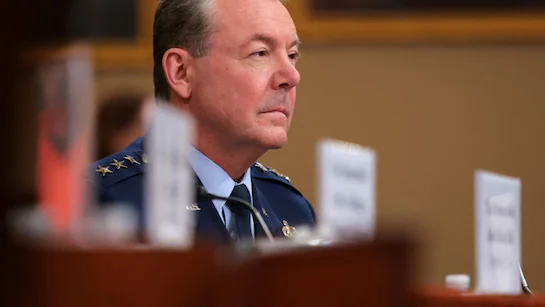
On August 22, 2025, Defense Secretary Pete Hegseth fired Lt. Gen. Jeffrey Kruse, the director of the Defense Intelligence Agency (DIA), sending shockwaves through the national security community. This decision, part of a broader purge of senior military and intelligence officials, has sparked intense debate about the state of U.S. military leadership and the politicization of intelligence. This article dives deep into the firing, its context, implications, and what it means for the future of U.S. defense policy, offering a comprehensive look at a pivotal moment in national security.
Who Is Lt. Gen. Jeffrey Kruse?
Lt. Gen. Jeffrey Kruse was a seasoned military officer with decades of service, appointed as the 23rd director of the DIA in February 2024. His tenure was expected to last until 2027, but it was cut short by Hegseth’s decision. Kruse’s career included roles such as director of intelligence for the U.S. Indo-Pacific Command and advisor for military affairs to the Director of National Intelligence, showcasing his deep expertise in global security matters.
Why Was Kruse Fired?
The official reason for Kruse’s dismissal was a vague “lack of confidence,” a term often used in military circles to mask underlying issues. Reports suggest the firing stemmed from a controversial DIA assessment in June 2025, which concluded that U.S. strikes on Iran’s nuclear facilities had only set back the program by a few months. This contradicted President Donald Trump’s claim that the sites were “obliterated,” prompting backlash from the administration.
The Context: U.S. Strikes on Iran’s Nuclear Program
In June 2025, the U.S. launched a significant military operation targeting three Iranian nuclear sites, involving over 125 aircraft and a guided missile submarine. Trump hailed the strikes as a “spectacular military success,” asserting they had destroyed Iran’s nuclear capabilities. However, the DIA’s preliminary assessment, marked as “low confidence” due to its rapid compilation, suggested the strikes had a limited impact, setting Iran’s program back by just a few months. This discrepancy fueled tensions, as the leaked report undermined the administration’s narrative.
The Role of the Defense Intelligence Agency
The DIA, a critical component of the U.S. intelligence community, focuses on gathering and analyzing intelligence on foreign militaries. Unlike the CIA, which has a broader mandate, the DIA provides specialized insights to support military operations and national security policy. Kruse’s leadership was pivotal in navigating complex global threats, making his abrupt dismissal particularly significant.
The Broader Purge: A Pattern of Dismissals
Kruse’s firing is not an isolated incident but part of a larger wave of dismissals under Hegseth’s tenure as Defense Secretary. Since January 2025, several high-ranking officials have been removed, often without clear explanations. This pattern has raised concerns about the politicization of the military and intelligence communities.
Notable Dismissals Under Hegseth
- Gen. Charles Q. Brown Jr.: Fired as chairman of the Joint Chiefs of Staff in February 2025.
- Gen. Timothy Haugh: Removed as head of the National Security Agency and U.S. Cyber Command.
- Adm. Lisa Franchetti: Dismissed as the Navy’s top officer.
- Gen. David Allvin: Announced early retirement as Air Force Chief of Staff in November 2025.
- Vice Adm. Shoshana Chatfield: Fired from a senior NATO role.
Why Are These Firings Happening?
The dismissals appear tied to a combination of factors, including disagreements over policy, intelligence assessments, and perceived loyalty to the administration. Some reports suggest that officers endorsing diversity, equity, and inclusion (DEI) programs have been targeted, aligning with Trump’s broader push to eliminate such initiatives across government agencies.
The Political Fallout: Reactions and Criticism
Kruse’s firing has drawn sharp criticism from Democratic lawmakers and former defense officials. Sen. Mark Warner (D-Va.), vice chair of the Senate Intelligence Committee, called it a “dangerous habit of treating intelligence as a loyalty test.” Rep. Seth Moulton (D-Mass.) warned of an “authoritarian military” reminiscent of regimes in Russia or China. These critiques highlight fears that the administration prioritizes political alignment over objective analysis.
Support for the Firing
On the other hand, some voices on X and in conservative media have praised Hegseth’s decision, arguing it ensures accountability and aligns leadership with the administration’s goals. One post on X claimed Kruse’s assessment was “false” and undermined the success of the Iran strikes, reflecting a segment of public sentiment that supports decisive action against dissenting voices.
Implications for National Security
The firing of Kruse and other senior officials raises serious questions about the independence of the U.S. intelligence community. When leaders are dismissed for delivering inconvenient truths, it risks creating a chilling effect, where analysts may self-censor to avoid repercussions. This could undermine the quality of intelligence critical for informed decision-making.
Potential Risks to Military Readiness
- Loss of Expertise: Frequent turnover of experienced leaders like Kruse disrupts continuity and institutional knowledge.
- Morale Impact: Repeated firings may demoralize career officers and analysts, leading to talent loss.
- Politicization: A military perceived as politically driven could erode public trust and international credibility.
- Operational Gaps: Rapid leadership changes can delay critical operations and strategic planning.
Comparison: Historical Precedents
| Event | Year | Context | Outcome |
|---|---|---|---|
| Nixon’s Firing of CIA Director | 1973 | Disagreement over Watergate-related intelligence | Weakened CIA morale, public distrust |
| Trump’s Firing of FBI Director Comey | 2017 | Russia investigation tensions | Sparked debates on executive overreach |
| Hegseth’s Firing of Kruse | 2025 | Iran strikes assessment dispute | Ongoing concerns about politicization |
The table above shows that Kruse’s firing fits into a historical pattern of tensions between administrations and intelligence agencies, often with lasting consequences for trust and effectiveness.
Pros and Cons of Hegseth’s Approach
Pros
- Alignment with Policy Goals: Ensures leadership reflects the administration’s strategic priorities.
- Accountability: Signals that underperformance or misalignment won’t be tolerated.
- Decisive Leadership: Projects strength and decisiveness to allies and adversaries.
Cons
- Risk of Politicization: Undermines the neutrality of military and intelligence institutions.
- Loss of Expertise: Removes experienced leaders critical for complex global challenges.
- Chilling Effect: Discourages honest reporting, potentially compromising national security.
The Human Element: A Personal Perspective
Imagine being a career officer like Lt. Gen. Kruse, dedicating decades to serving your country, only to be dismissed over a single report that didn’t align with political expectations. I once spoke with a retired military analyst who described the pressure of delivering intelligence during politically charged times. “You’re walking a tightrope,” he said, “balancing truth with what the boss wants to hear.” Kruse’s firing feels like a stark reminder of that tightrope, where a misstep can end a distinguished career. It’s a gut punch to those who’ve spent their lives in service, and it makes you wonder: how many others are second-guessing their reports right now?
People Also Ask (PAA) Section
Why was Lt. Gen. Jeffrey Kruse fired?
Kruse was fired after the DIA’s preliminary assessment in June 2025 suggested U.S. strikes on Iran’s nuclear sites had limited impact, contradicting Trump’s claims. The official reason was “lack of confidence,” but the timing points to political motivations.
Who is Pete Hegseth?
Pete Hegseth is the U.S. Secretary of Defense, appointed in January 2025. A former Fox News host and Army veteran, he has overseen a series of high-profile dismissals of military leaders, aligning the Pentagon with Trump’s agenda.
What does the Defense Intelligence Agency do?
The DIA provides intelligence on foreign militaries to support U.S. military operations and national security policy. It focuses on areas like threat assessment, weapons capabilities, and global military trends, distinct from the CIA’s broader scope.
How does Kruse’s firing affect national security?
The dismissal risks politicizing intelligence, discouraging objective analysis, and disrupting leadership continuity. This could weaken the U.S.’s ability to respond to global threats effectively, especially amid tensions with Iran.
What’s Next for the DIA?
Following Kruse’s firing, Deputy Director Christine Bordine has assumed the role of acting director. Her leadership will be crucial in stabilizing the agency amid ongoing turmoil. The DIA faces the challenge of maintaining credibility while navigating political pressures, especially as global threats like Iran’s nuclear ambitions remain in focus.
Where to Get More Information
For those seeking deeper insights, reputable sources like NBC News and The Washington Post offer detailed reporting on Kruse’s firing and its implications. The Pentagon’s official website provides updates on leadership changes, while congressional hearings may shed light on the broader purge.
Best Tools for Staying Informed
- News Aggregators: Platforms like Google News or Apple News compile updates from multiple sources.
- Official Statements: Check the Pentagon’s press releases for direct announcements.
- Social Media Monitoring: Follow accounts like @CarlaBabbVOA on X for real-time updates on defense news.
FAQ Section
Why are so many military leaders being fired in 2025?
The Trump administration, under Hegseth, has prioritized aligning military leadership with its policy goals, leading to dismissals of officers perceived as misaligned or critical of the administration’s narrative.
What was the DIA’s assessment of the Iran strikes?
The DIA’s June 2025 report, labeled “low confidence,” estimated that U.S. strikes set Iran’s nuclear program back by a few months, not “obliterated” as Trump claimed, sparking controversy.
Who is replacing Lt. Gen. Kruse?
Christine Bordine, the DIA’s deputy director, has taken over as acting director effective immediately, ensuring continuity in the agency’s operations.
How does this affect U.S.-Iran relations?
The firing may signal a hardline stance against Iran, but it risks undermining credible intelligence, potentially complicating diplomatic efforts or future military actions.
Is the DIA’s role different from the CIA’s?
Yes, the DIA focuses on military-specific intelligence, such as foreign weapons systems and troop movements, while the CIA handles broader national security issues, including political and economic intelligence.
Conclusion: A Crossroads for U.S. Defense
The firing of Lt. Gen. Jeffrey Kruse is more than a personnel change; it’s a flashpoint in the ongoing tension between truth and politics in U.S. national security. As Hegseth and the Trump administration reshape the Pentagon, the ripple effects could redefine how intelligence informs policy. For now, the DIA must navigate a delicate balance, delivering accurate assessments while under intense scrutiny. As a reader, you’re left to ponder: is this a necessary realignment or a dangerous precedent? The answer may shape America’s security for years to come.