Introduction: The Unforgettable Women of PyeongChang
Picture this: the icy slopes of PyeongChang, South Korea, in February 2018, where the world’s best athletes faced biting cold, fierce competition, and the weight of their nations’ hopes. Among them, women athletes delivered performances that didn’t just win medals—they rewrote history. From a teenage snowboarder’s gravity-defying spins to a veteran skier’s record-breaking medal haul, this article dives into the top five women’s performances at the PyeongChang 2018 Winter Olympics, blending awe-inspiring stories with insights to captivate and inform. Let’s explore the moments that left us cheering, crying, and believing in the power of human spirit.
What Made PyeongChang 2018 Special?
The PyeongChang Winter Olympics, held from February 9 to 25, 2018, marked South Korea’s first time hosting the Winter Games. With 102 events across 15 disciplines and athletes from 92 nations, it was a global stage for excellence. Women athletes, in particular, shone brightly, breaking records and defying expectations in a compact yet vibrant Olympic setting.
A Historic Stage
PyeongChang’s “New Horizons” motto aimed to boost winter sports in Asia, and women athletes seized the moment. From figure skating to snowboarding, their performances captivated millions, with some events, like the women’s ice hockey unified Korean team, symbolizing peace and unity.
1. Marit Bjørgen: The Cross-Country Queen
Marit Bjørgen, Norway’s cross-country skiing legend, cemented her legacy as the most decorated Winter Olympian ever. At 37, she won five medals—two golds, one silver, and two bronzes—bringing her career total to 15, surpassing her compatriot Ole Einar Bjørndalen’s record. Her crowning moment was the 30km classical race, where she cruised to victory, proving age is just a number.
A Career-Defining Performance
Bjørgen’s five-medal haul included golds in the 30km classical and 4x5km relay, showcasing her endurance and versatility. Her emotional final race, dedicated to her family and fans, left spectators in awe. This wasn’t just about medals—it was about a mother and athlete defying the odds.
Why It Stands Out
Bjørgen’s performance wasn’t just a personal triumph; it elevated Norway to the top of the medal table with 39 medals. Her grit inspired young athletes, showing that passion and perseverance can outshine even the fiercest competition.
2. Chloe Kim: The Snowboarding Prodigy
At just 17, Chloe Kim, a California-born snowboarder with South Korean roots, stole the show in the women’s halfpipe. Her near-perfect score of 98.25 included back-to-back 1080-degree spins—a first for a woman in Olympic history. Kim’s gold-medal run was a dazzling display of skill and charisma, captivating a crowd that included her extended family from South Korea.
A Star Is Born
Kim’s performance was a masterclass in confidence. Already a three-time X Games gold medalist, she entered PyeongChang as a favorite but delivered under pressure, wrapping up the gold before her final run. Her social media posts, joking about craving ice cream mid-competition, endeared her to fans worldwide.
Cultural and Personal Impact
Competing in her parents’ homeland, Kim’s victory was a proud moment for the Korean diaspora. Her ability to connect with fans through humor and authenticity made her a global sensation, proving that young athletes can shine on the biggest stage.
3. Alina Zagitova: Figure Skating’s Teenage Titan
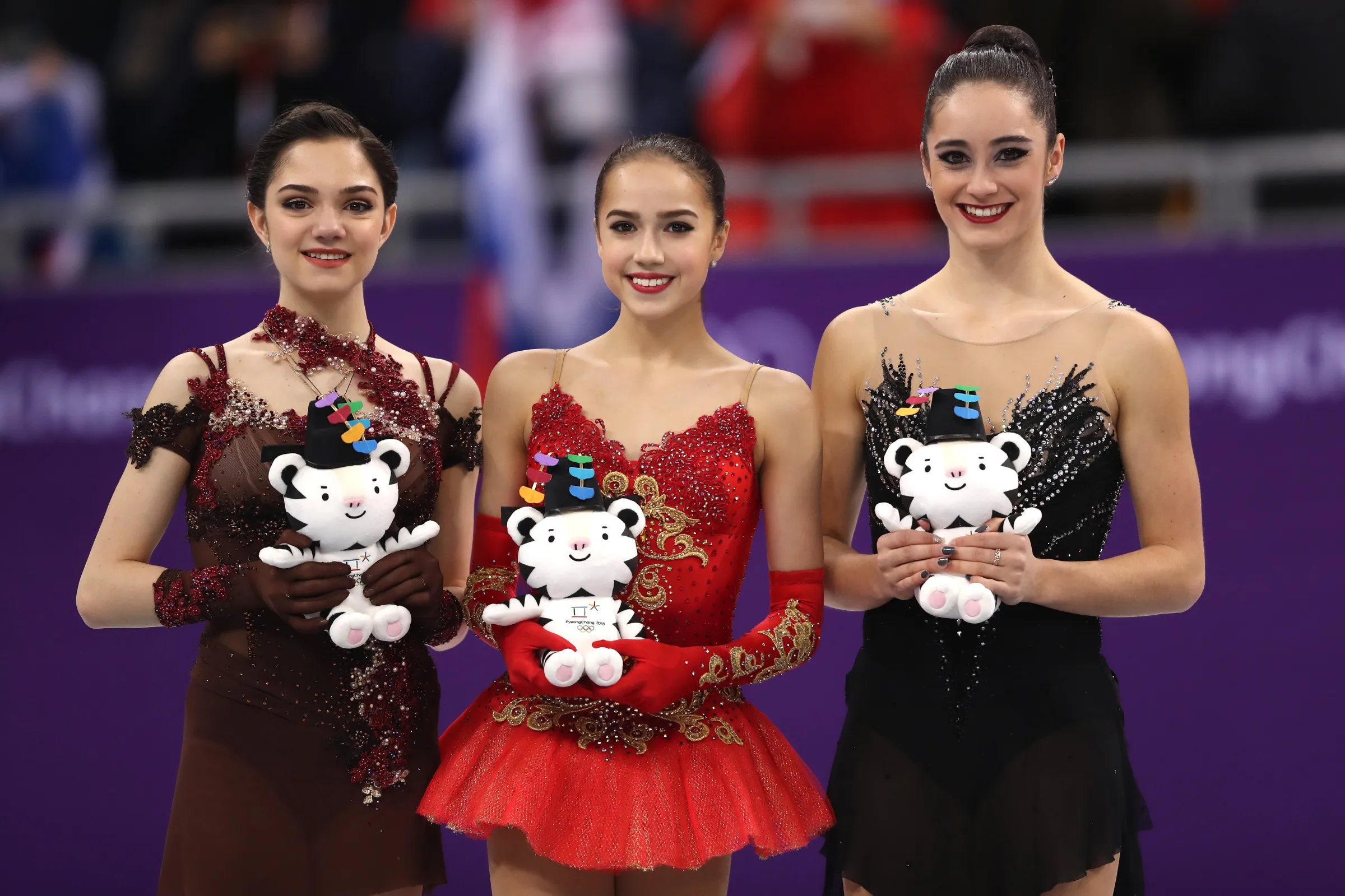
Fifteen-year-old Alina Zagitova, competing as an Olympic Athlete from Russia (OAR), edged out compatriot Evgenia Medvedeva in a thrilling ladies’ singles figure skating final. Scoring 239.57, including a world-record short program of 82.92, Zagitova’s precision and artistry clinched gold in a nail-biting finish at Gangneung Ice Arena.
A Battle for the Ages
Zagitova and Medvedeva’s duel was a highlight of PyeongChang, with both scoring identical 156.65 in the free skate. Zagitova’s slight edge in the short program made the difference, showcasing her technical prowess and composure under pressure. Their emotional post-competition embrace spoke volumes about sportsmanship.
Breaking Records at 15
Zagitova’s world-record short program, set just minutes after Medvedeva’s own record-breaking score, underscored her fearless talent. As the youngest figure skating gold medalist since Tara Lipinski in 1998, she inspired a new generation of skaters.
4. Ester Ledecká: The Dual-Sport Phenom
Czech athlete Ester Ledecká made Olympic history as the first woman to win gold in two different sports at the same Winter Games. She stunned the alpine skiing world with a super-G gold, then doubled down with a snowboarding parallel giant slalom victory, proving her versatility and rewriting what’s possible in winter sports.
A Shocking Double Triumph
Ledecká’s super-G win, using borrowed skis and finishing just 0.01 seconds ahead of Austria’s Anna Veith, was a Cinderella story. Four days later, she clinched snowboarding gold, becoming a legend at 22. Her disbelief at the finish line—thinking her time was a glitch—added a relatable charm to her story.
Redefining Athletic Boundaries
Ledecká’s dual-sport dominance challenged the notion that athletes must specialize. Her success sparked discussions about cross-disciplinary training, inspiring athletes to push beyond traditional boundaries.
5. Tessa Virtue and Scott Moir: Ice Dance Perfection
While technically a mixed event, Tessa Virtue’s ice dance performance with Scott Moir for Canada was a standout, earning them gold in both the ice dance and team events. Their near-flawless routines, including a mesmerizing “Moulin Rouge” free dance, captivated audiences and secured their place as Olympic icons.
A Romantic and Technical Masterpiece
Virtue and Moir’s chemistry and precision pushed them past France’s Gabriella Papadakis and Guillaume Cizeron by just 0.79 points. Their emotional farewell performance, likely their last Olympics, left fans teary-eyed and cemented their legacy as Canada’s most decorated figure skaters.
A Legacy of Excellence
Virtue’s grace under pressure and her partnership with Moir inspired countless young dancers. Their ability to tell a story through movement made their performance a cultural touchstone, resonating far beyond the rink.
Comparing the Top Performances
Each athlete brought something unique to PyeongChang, but their performances share common threads: resilience, innovation, and emotional impact. Here’s how they stack up.
Table: Top 5 Women Performances at PyeongChang 2018
| Athlete | Event | Achievement | Impact |
|---|---|---|---|
| Marit Bjørgen | Cross-Country Skiing | 5 medals (2 golds) | Most decorated Winter Olympian |
| Chloe Kim | Snowboarding Halfpipe | Gold, first woman with back-to-back 1080s | Cultural icon for Korean diaspora |
| Alina Zagitova | Figure Skating (Ladies’ Singles) | Gold, world-record short program | Youngest skating champion since 1998 |
| Ester Ledecká | Alpine Skiing & Snowboarding | 2 golds in different sports | First woman to win dual-sport golds |
| Tessa Virtue | Figure Skating (Ice Dance) | 2 golds (team, ice dance) | Iconic storytelling, emotional resonance |
Shared Traits of Greatness
- Resilience: Bjørgen competed as a mother, Kim faced family expectations, and Ledecká overcame skepticism about her dual-sport pursuit.
- Innovation: Zagitova’s technical jumps and Kim’s 1080s pushed their sports forward.
- Emotional Connection: Virtue’s storytelling and Zagitova’s sportsmanship with Medvedeva resonated deeply with fans.
Pros and Cons of Olympic Stardom
Pros
- Global Recognition: Athletes like Kim and Zagitova became household names, inspiring millions.
- Career Opportunities: Medals open doors to endorsements and coaching roles, as seen with Virtue and Moir.
- Cultural Impact: Performances like Ledecká’s challenge athletic norms, encouraging versatility.
Cons
- Immense Pressure: Young athletes like Zagitova faced intense scrutiny at 15.
- Physical Toll: Bjørgen’s grueling races and Kim’s high-risk tricks carry injury risks.
- Short-Lived Spotlight: Post-Olympic fame can fade, requiring athletes to reinvent themselves.
The Human Side: Stories Behind the Medals
I remember watching Chloe Kim’s halfpipe run with my family, jaws dropped as she soared higher than seemed humanly possible. Her grin at the finish line, knowing she’d nailed it, felt like a shared victory. Similarly, a friend who followed Bjørgen’s career described tearing up as the Norwegian crossed the finish line in her final race, a testament to her enduring spirit. These moments remind us that behind every medal is a story of sacrifice, doubt, and triumph—stories that make us root for these women not just as athletes, but as people.
People Also Ask (PAA)
Who won the most medals at PyeongChang 2018?
Marit Bjørgen of Norway won the most medals, securing five (two golds, one silver, two bronzes) in cross-country skiing, making her the most decorated Winter Olympian ever.
What was the most memorable moment of PyeongChang 2018?
Many consider Ester Ledecká’s dual-sport gold medals in alpine skiing and snowboarding as the most memorable, a historic first that stunned the Olympic world.
How did Chloe Kim perform at PyeongChang?
Chloe Kim won gold in the women’s halfpipe, scoring 98.25 and becoming the first woman to land back-to-back 1080s in Olympic competition, a defining moment at 17.
Where can I watch PyeongChang 2018 highlights?
Official highlights are available on www.olympics.com, including videos of top performances like Zagitova’s figure skating and Kim’s halfpipe runs. YouTube also hosts Olympic archives.
What are the best tools for tracking Olympic performances?
Use the IOC’s official site (www.olympics.com) for real-time results and athlete profiles. Apps like TeamUSA or the Olympic app offer live updates and medal trackers.
FAQs: Your Questions Answered
Why were PyeongChang’s women’s performances so impactful?
These performances broke records, defied expectations, and inspired global audiences. From Bjørgen’s historic medal count to Ledecká’s dual-sport feat, they showcased the pinnacle of athletic achievement.
How do Olympic athletes prepare for such high-stakes events?
Athletes like Kim and Zagitova train for years, combining physical conditioning, mental coaching, and technical practice. Support from coaches, families, and sports psychologists is crucial.
Can I still watch PyeongChang 2018 events?
Yes, visit www.olympics.com or platforms like NBC Sports for archived footage. YouTube channels like OlympicVibes also feature highlight reels of top moments.
What challenges did these women face?
Young athletes like Zagitova dealt with intense pressure, while veterans like Bjørgen balanced family and competition. All faced physical risks and the weight of national expectations.
How can I follow future Olympic stars?
Track rising athletes through TeamUSA.org, FIS, or ISU websites. Social media platforms like Instagram also offer behind-the-scenes glimpses into their training and lives.
Conclusion: A Legacy of Inspiration
The women of PyeongChang 2018 didn’t just compete—they redefined what’s possible. Marit Bjørgen’s record-breaking run, Chloe Kim’s fearless spins, Alina Zagitova’s graceful precision, Ester Ledecká’s dual-sport dominance, and Tessa Virtue’s emotional artistry left an indelible mark on Olympic history. Their stories remind us that greatness comes from grit, heart, and a touch of audacity. Dive deeper into their journeys on www.olympics.com or follow TeamUSA.org for updates on future stars. Let’s keep cheering for the women who inspire us to chase our own dreams, on and off the ice.